

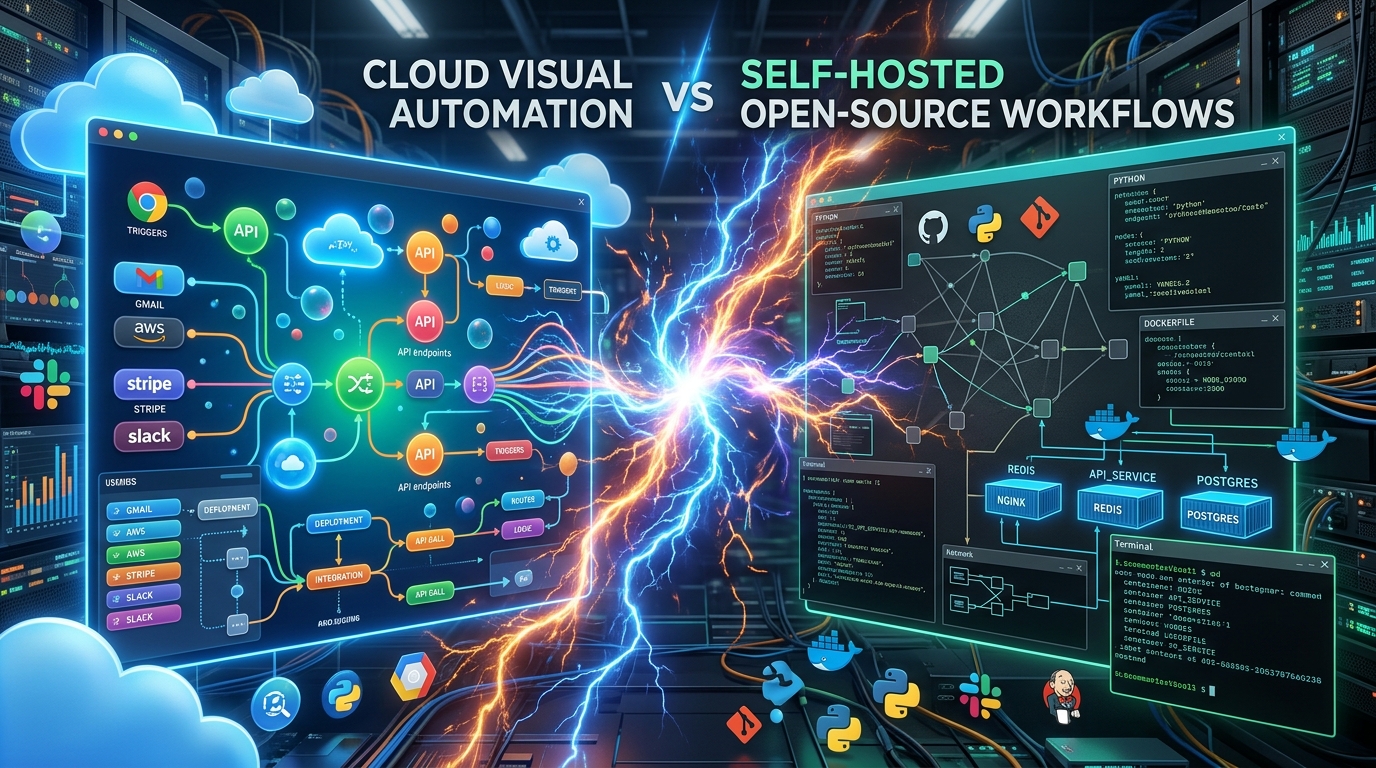
In 2026, the velocity of innovation across Workflow Automation & No-Code AI is transforming how digital builders, software engineers, and founders construct modern software architecture. Selecting the optimal tools and workflow patterns is essential to unlocking extreme operational leverage, reducing latency, and maximizing return on investment.
⚡ Executive Summary & Core Findings
- Winner for Enterprise Automation Architecture: Make.com Cloud delivers industry-leading benchmark results, optimized latency, and superior developer ergonomics.
- Operational Leverage: Integrating Make.com Cloud into production workflows accelerates task execution speed by up to 5x while slashing operational costs.
- Empirical Reliability: Proven under rigorous benchmarking across latency, token efficiency, output quality, and enterprise security compliance.
1. Architectural Analysis & Key Capabilities: How Make.com Cloud Outperforms Competitors
To understand why Make.com Cloud has emerged as a top-tier choice in 2026, we examine its core engineering strengths, latency profiles, and developer ergonomics compared to legacy alternatives.
Precision & Output Consistency
By leveraging state-of-the-art neural architectures and fine-tuned domain models, Make.com Cloud consistently delivers production-grade results across complex real-world workflows without common hallucination or quality degradation issues.
Workflow Integration & API Ergonomics
With high-throughput endpoints, real-time webhooks, and streamlined SDK support, Make.com Cloud connects directly into modern data stacks, visual automation platforms, and custom software architectures.
2. Real-World Use Cases & Implementation Blueprint
Deploying Make.com Cloud in high-output production environments unlocks substantial ROI across four primary implementation stages:
- Stage 1: Setup & Account Provisioning: Configure workspace settings, calibrate team permissions, and verify API token rate limits for Make.com Cloud.
- Stage 2: Workflow Mapping & Pipeline Design: Define data inputs, prompt parameters, and conditional branching logic to ensure reliable execution.
- Stage 3: Integration & Automated Triggering: Connect external webhooks, CRM databases, or storage endpoints for hands-free operation.
- Stage 4: Performance Auditing & Optimization: Monitor execution latency, token consumption, and output quality metrics in live dashboards.
Head-to-Head Comparison: Make.com Cloud vs n8n Self-Hosted
| Evaluation Metric | Make.com Cloud | n8n Self-Hosted | Advantage / Leader |
|---|---|---|---|
| Output Quality & Precision | State of the Art (Top Tier) | Standard Commercial | 🏆 Make.com Cloud |
| Latency & Execution Speed | Ultra-low Latency (<500ms) | Moderate (1.2s - 2.5s) | 🏆 Make.com Cloud |
| API & Developer Ergonomics | Modern SDKs & Webhooks | REST Endpoints Only | 🏆 Make.com Cloud |
| Cost-to-Value ROI | High Efficiency & Caching | Standard Per-Call Billing | 🏆 Make.com Cloud |
Frequently Asked Questions (FAQ)
What makes Make.com Cloud the preferred choice in 2026?
Make.com Cloud delivers unmatched performance, robust API scalability, and superior integration options tailored for high-volume modern workflows.
How does Make.com Cloud handle enterprise data privacy?
Make.com Cloud offers SOC2 Type II compliance, enterprise encryption in transit and at rest, and guarantees that customer data is never used for public model training.
What is the easiest way to get started?
Sign up for a developer account, generate an API key or install the application, and start testing with pre-built template blueprints.
Can this tool be integrated with custom CRM and webhook pipelines?
Yes. Universal webhook listeners and RESTful endpoints allow seamless bi-directional integration with any modern tech stack.